
Few things carry deeper emotional and spiritual significance than the festivals in Hinduism. These are not just events on a calendar. They are living traditions that bring families closer, reinforce values, and offer a path to the divine. Two such beautiful celebrations are Janmashtami and Raksha Bandhan. Each holds a special place in the hearts of millions and teaches timeless lessons.
Why Festivals in Hinduism Matter So Deeply
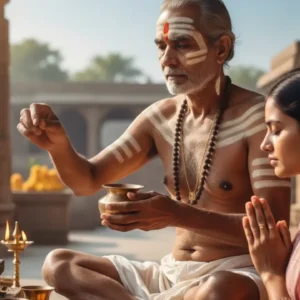
Every Hindu festival carries a purpose. It’s either a celebration of a divine event, a reminder of dharma, or a time to reflect and renew. Unlike routine holidays, festivals in Hinduism often combine spiritual practice with personal reflection and family bonding.
Whether it’s fasting, chanting, decorating the house, or offering sweets to deities, every action is symbolic. It’s this symbolism that creates impact. These festivals train the mind to move beyond the everyday and connect with something sacred.
Janmashtami: Celebrating Divine Play and Purpose
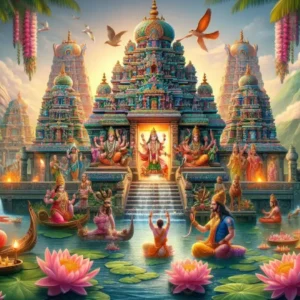
Janmashtami marks the birth of Lord Krishna, an avatar of Vishnu. But it’s more than a birthday celebration. It’s a call to embrace life’s challenges with joy, intelligence, and love.
Krishna was born at midnight, in secrecy, during a time of oppression. His arrival symbolized hope in darkness. Devotees stay awake until midnight, sing devotional songs, and tell stories of Krishna’s childhood. Homes become temples. Hearts become lighter.
What Janmashtami Teaches Us Today
The story of Krishna isn’t just mythology. It offers practical tools for daily life.
When my friend Sarah faced a job loss, she recalled Krishna’s teaching from the Bhagavad Gita: focus on effort, not result. That one thought helped her bounce back stronger, with a clearer mindset.
Similarly, Krishna’s mischief as a child reminds us that divinity isn’t always serious. It’s okay to laugh, to dance, to play. Joy itself is spiritual.
Children especially love dressing up as Krishna and Radha. It’s not just cute—it’s a way of introducing them to values like compassion, courage, and love for truth.
Raksha Bandhan: The Sacred Thread of Relationships
Unlike Janmashtami, which focuses on devotion to God, Raksha Bandhan centers around human bonds. Celebrated between brothers and sisters, it honors a promise of lifelong protection.
A sister ties a rakhi (sacred thread) on her brother’s wrist. The brother pledges to protect her. But it’s more than that. It’s a moment to reflect on how we value our relationships.
Why Raksha Bandhan Still Matters
In a world where relationships often feel disposable, Raksha Bandhan reminds us to slow down. To say, “I’ve got your back.”
Even if you don’t have a biological sibling, this festival can be celebrated with anyone you feel close to. Many friends, cousins, or even co-workers choose to honor each other on this day.
I remember a story shared by a teacher named Michael. One of his students, an Indian girl far from home, tied a rakhi on his wrist. It surprised him, but he wore it with pride. She said, “You’ve protected my confidence and identity in this class.” That’s the essence of Raksha Bandhan.
It’s a festival that transcends blood and geography. At its heart is gratitude, responsibility, and emotional honesty.
How Both Festivals Shape Us Spiritually and Socially
Festivals in Hinduism are not isolated from life. They’re part of it. Janmashtami teaches surrender to the divine while acting with wisdom. Raksha Bandhan teaches commitment, care, and emotional protection.
Together, they balance the inner and outer world. One builds your connection with God. The other strengthens your ties with fellow humans.
Both remind us to show up with intention. Whether through a prayer or a rakhi, the action matters.
Tips to Make These Festivals More Meaningful
Go beyond rituals. Understand why you do what you do. Read the stories behind the customs.
Get the whole family involved. Let children decorate the prayer room. Let elders tell stories.
Create personal meanings. You can celebrate Janmashtami with gratitude journaling or Raksha Bandhan by writing a heartfelt letter.
Invite non-Hindu friends. These festivals carry universal values. Sharing them spreads understanding and joy.
What We Often Miss About Hindu Festivals
We sometimes focus too much on external things—clothes, sweets, Instagram posts. But festivals in Hinduism are inner celebrations. Their true power lies in how they transform us.
Ask yourself after the festival:
Did I grow in love?
Did I find some inner peace?
Did I make someone feel valued?
That’s what these celebrations are for.
A Personal Note on Janmashtami and Rakhi
Last year, I celebrated Janmashtami with my grandmother. She played old bhajans, and we sat by the lamp, talking about Krishna’s childhood. No loudspeakers. No crowds. Just peace.
For Raksha Bandhan, my younger sister sent me a hand-written note with the rakhi. She wrote, “This year, I’m the one promising to protect you emotionally.” It made me teary-eyed. These small moments create deep memories.
Festivals don’t have to be grand. They just need to be sincere.
Final Thoughts
Festivals in Hinduism are not just about tradition. They are tools for self-growth, love, and spiritual grounding. Janmashtami and Raksha Bandhan together show how to love the divine and love each other.
Bring these celebrations into your life with awareness. Let them uplift your heart, anchor your relationships, and brighten your days.
Have a story or a memory to share? Drop it in the comments. Let’s celebrate together.