Goddess Chhinnamasta challenges comfort from the very first glance. Goddess Chhinnamasta stands fearless, self-decapitated, yet radiant with power. Her image unsettles many, yet it also awakens something raw and honest. This form does not invite passive devotion. It demands reflection, courage, and responsibility for personal change. Goddess Chhinnamasta speaks directly to moments when life forces us to transform without negotiation.
Her symbolism feels extreme only because it mirrors truths people avoid. Change rarely feels graceful while it happens. Transformation often arrives through shock, loss, or painful awareness. Goddess Chhinnamasta reminds seekers that growth does not ask permission. It arrives when old identities no longer serve survival or truth.
Understanding the Iconography Beyond Fear
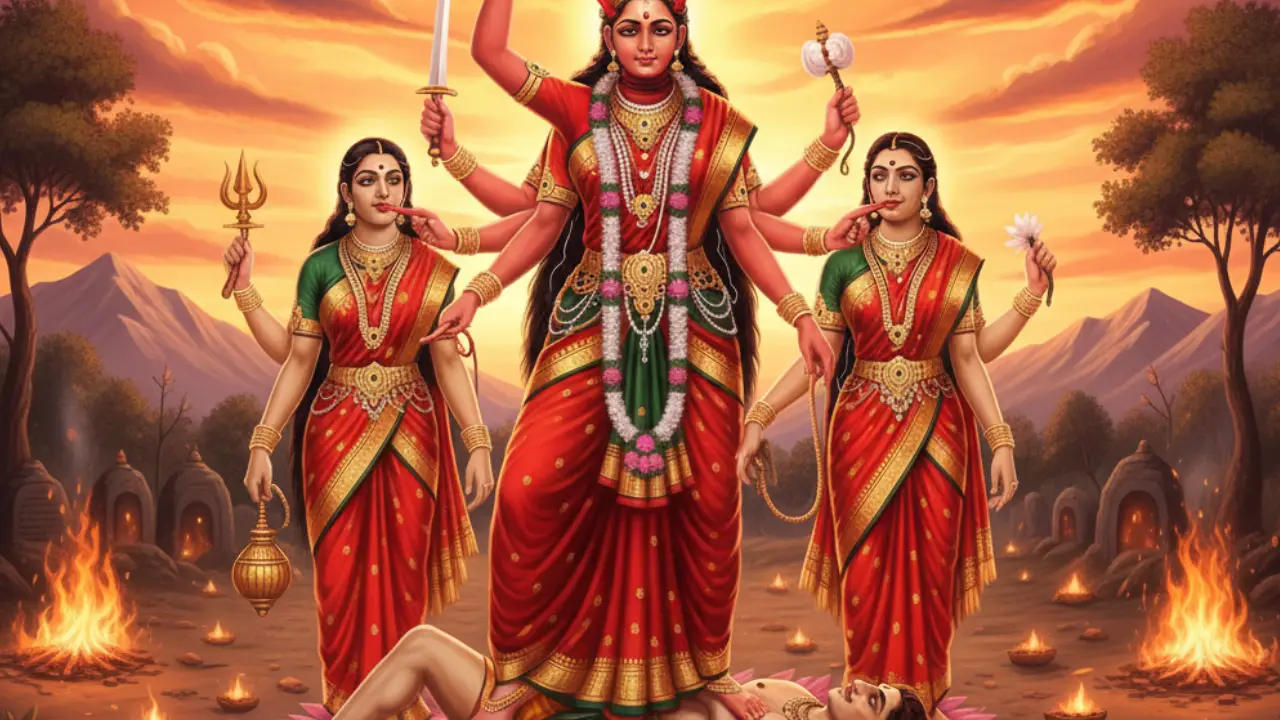
Goddess Chhinnamasta holds her severed head while three streams of blood flow outward. Two streams nourish her attendants, while one feeds herself. This image does not glorify destruction. It illustrates conscious sacrifice and balanced energy flow. She gives and receives without dependence or guilt.
Many people struggle with boundaries because they overgive until empty. This form shows a different truth. Sustaining others must never come at the cost of self-erosion. Goddess Chhinnamasta models self-regulation through radical honesty. She demonstrates that true nourishment begins with self-awareness.
Her stance over a united couple also carries meaning. It symbolizes mastery over desire rather than rejection of it. Transformation does not demand suppression. It asks for control, clarity, and conscious direction of energy.
Fearless Self-Sacrifice as Inner Discipline
Self-sacrifice often carries emotional confusion. People confuse sacrifice with suffering or self-neglect. Goddess Chhinnamasta corrects that misunderstanding sharply. Her sacrifice is intentional, not forced. She chooses transformation rather than clinging to comfort.
Consider a professional who leaves a respected role after realizing it drains integrity. Friends may call it foolish. Family may question stability. Yet something deeper insists on change. That moment mirrors her message. Fear loses power when truth becomes unavoidable.
Goddess Chhinnamasta teaches that disciplined sacrifice strengthens identity. She does not abandon herself to serve others. She sustains herself while supporting the world around her.
Transformation Through Sudden Awakening
Some transformations unfold gently. Others arrive like lightning. Goddess Chhinnamasta represents the second kind. She governs moments that collapse illusions quickly. A betrayal exposes false trust. A health scare ends careless habits. A personal failure reveals ignored weaknesses.
These moments feel brutal because they strip illusions instantly. Yet they also shorten suffering. Prolonged denial drains more energy than sudden clarity. Goddess Chhinnamasta stands for awakening that cuts cleanly.
People often describe these moments as breaking points. Yet many later recognize them as turning points. The shock becomes a doorway rather than a punishment.
Power Without Attachment to Identity
Goddess Chhinnamasta exists without attachment to form. She holds her own head calmly, without panic or loss. This detail carries deep psychological meaning. Identity often traps people more than circumstances. Titles, roles, and expectations harden into cages.
A parent whose children leave home may feel lost. A founder who sells a company may feel irrelevant. A partner after separation may feel erased. Goddess Chhinnamasta teaches that identity remains fluid. Power does not disappear when roles dissolve.
Transformation requires releasing labels without losing inner authority. Her image reinforces that truth without sentimentality.
Controlled Desire and Conscious Energy Flow
Desire drives most human behavior. When unmanaged, it drains vitality. When controlled, it fuels growth. Goddess Chhinnamasta does not reject desire. She stands above it with awareness.
People who chase constant stimulation often feel exhausted. Those who suppress desire often feel numb. Her symbolism offers a third path. Conscious engagement replaces reaction. Energy moves where intention directs it.
A creative professional who limits distractions often produces deeper work. A person who chooses silence before reacting preserves dignity. These quiet choices echo her teaching daily.
Applying Chhinnamasta’s Wisdom to Modern Life
Transformation today rarely looks spiritual on the surface. It appears through difficult conversations, firm boundaries, and honest endings. Goddess Chhinnamasta encourages courage during these moments.
Start by observing areas where fear delays action. Notice habits that drain energy without return. Recognize relationships that survive only through self-erasure. Transformation begins with awareness, not action.
Next comes intentional sacrifice. Remove one behavior that weakens self-respect. Replace it with a boundary that protects clarity. These choices feel uncomfortable at first. Strength grows through repetition.
Finally, accept change without nostalgia. Holding onto outdated identities prolongs pain. Goddess Chhinnamasta teaches clean endings rather than prolonged suffering.
The Role of Shock and Truth in Spiritual Growth
Many spiritual paths emphasize peace and harmony. Goddess Chhinnamasta completes that picture by honoring disruption. Growth does not always feel peaceful. Truth sometimes arrives through discomfort.
A person who confronts addiction often faces brutal self-honesty. A leader who admits failure regains credibility. These truths hurt initially but restore balance. Goddess Chhinnamasta stands beside those moments.
She reminds seekers that awakening does not always whisper. Sometimes it arrives loudly because silence failed.
Why Fearlessness Matters More Than Comfort
Comfort preserves patterns. Fearlessness breaks them. Goddess Chhinnamasta does not promise ease. She offers liberation through clarity. That clarity demands courage.
People often delay change hoping for certainty. Yet certainty rarely arrives before action. Fearlessness means moving despite uncertainty. It means trusting inner alignment more than external approval.
Her symbolism rewards those who choose integrity over convenience. Transformation becomes sustainable only when rooted in truth.
A Living Presence, Not Just a Fierce Image
Goddess Chhinnamasta lives through daily choices, not rituals alone. She appears whenever someone chooses growth over familiarity. She stands present when truth replaces performance.
Her form shocks the mind so the soul can awaken. That shock dissolves illusions that gentler symbols cannot reach. Fearlessness becomes practical, not abstract.
Those who understand her symbolism stop fearing change. They learn to respect it instead.
Final Reflection and Invitation
Goddess Chhinnamasta represents transformation without apology. She teaches self-sustaining sacrifice, controlled desire, and fearless truth. Her symbolism speaks directly to modern struggles with identity, burnout, and suppressed authenticity.
Every person encounters moments requiring bold change. Ignoring them delays growth. Facing them creates freedom. Goddess Chhinnamasta stands as a reminder that courage begins with honesty.
Have you experienced a moment that forced sudden transformation? Share your story below and explore how her symbolism resonates with your journey.