
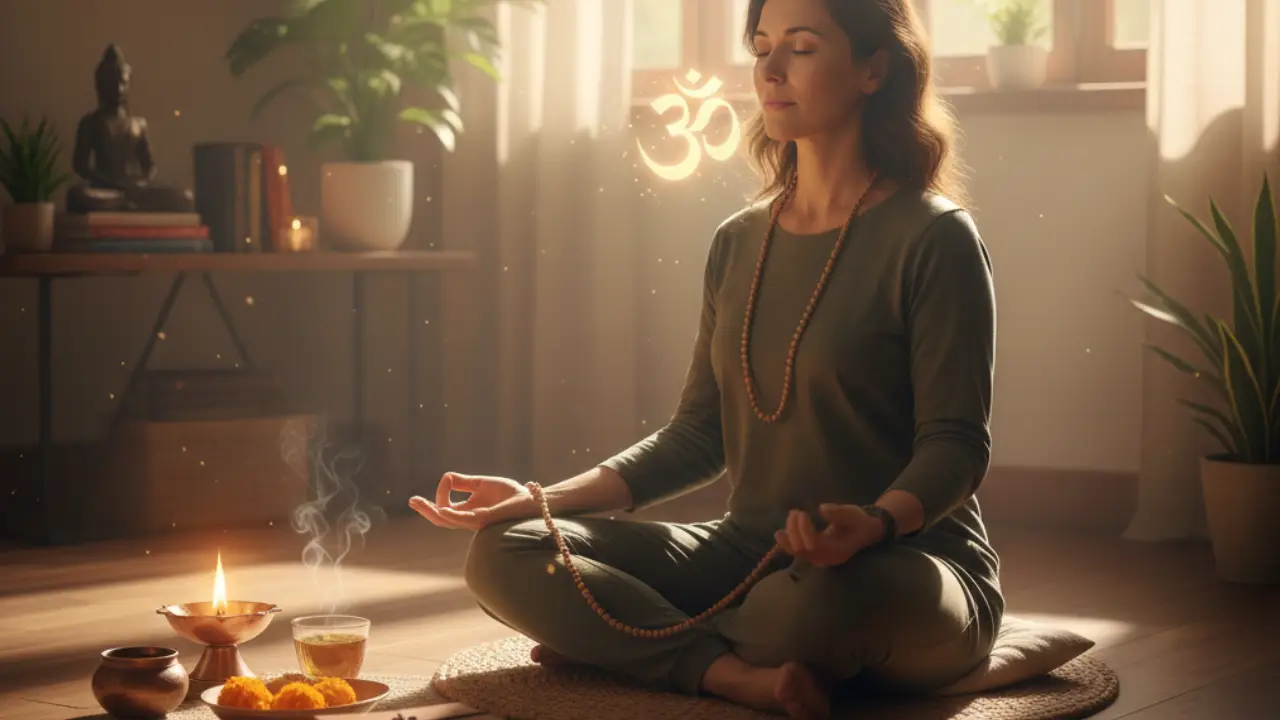
Daily mantra practice begins quietly, often without ceremony, yet it reshapes spiritual life through steady repetition and lived experience. Many seekers start chanting during uncertain phases, searching for grounding rather than miracles. Over time, the practice stops feeling borrowed and starts feeling personal. Sound turns into rhythm, and rhythm becomes familiarity. That familiarity creates trust, which is central to spiritual growth. A consistent daily mantra practice slowly builds this trust within.
Why Mantras Hold a Special Place in Hindu Spirituality
Mantras occupy a unique position because they combine sound, intention, and awareness. Hindu traditions treat sound as a carrier of consciousness, not just meaning. Repetition trains the mind to rest on one point. That single focus reduces mental noise over time. Scriptures describe mantras as tools, not symbols. Their value comes from practice, not belief alone.
Daily mantra practice works because it engages body, breath, and mind together. The lips move, breath follows rhythm, and attention stays anchored. This coordination creates stability that reading or passive listening cannot match. Many spiritual teachers emphasize repetition because transformation requires familiarity. What repeats shapes the inner world.
The Psychological Shift That Comes With Daily Repetition
At first, chanting feels mechanical. Thoughts wander, and words feel empty. This stage frustrates many beginners. A woman named Clara once shared how she repeated a mantra during morning walks. Weeks passed without any emotional shift. One morning, she noticed her reaction to stress had softened.
That change did not arrive dramatically. It appeared as patience during conflict. Daily mantra practice rewires mental habits through exposure, not force. Neuroscience now confirms what sages observed. Repetition creates new neural patterns. Calm replaces urgency when the mind learns a stable rhythm.
How Daily Mantra Practice Builds Inner Discipline
Spiritual growth requires consistency more than intensity. A mantra practiced daily becomes a commitment that does not depend on mood. Discipline forms when practice continues on difficult days. A student named Daniel began chanting for five minutes before work. He chose the same time every day.
Months later, he noticed fewer skipped days across other habits. Daily mantra practice strengthened his sense of responsibility. Discipline born from spiritual practice feels different. It does not rely on pressure. It grows from respect for one’s own effort.
Choosing a Mantra That Aligns With Your Path
Selection matters, but not as much as sincerity. Some choose mantras connected to deities they feel drawn toward. Others receive guidance from teachers. The sound must feel approachable. A mantra that feels forced rarely lasts.
A simple Sanskrit mantra often works better than complex verses. Sound familiarity supports continuity. Daily mantra practice thrives on ease. When the mantra feels natural, resistance fades. Over time, meaning unfolds without deliberate analysis.
Integrating Mantra Practice Into Modern Life
Busy schedules often discourage spiritual routines. Many assume practice requires isolation or elaborate rituals. That belief creates unnecessary barriers. Mantras adapt well to daily life rhythms. Chanting during commutes or quiet moments works effectively.
A parent named Sofia began chanting softly while preparing breakfast. She noticed reduced impatience with her children. Daily mantra practice fits life when approached flexibly. Spirituality grows stronger when it lives alongside responsibility.
The Role of Faith Versus Experience
Faith initiates practice, but experience sustains it. Many start chanting because texts recommend it. Others follow family tradition. Over time, experience replaces borrowed belief. Subtle emotional shifts validate the effort.
Daily mantra practice teaches through repetition rather than explanation. The practitioner becomes the evidence. This experiential learning aligns with Hindu philosophy. Truth reveals itself through direct engagement, not persuasion.
Overcoming Common Obstacles in Mantra Practice
Distraction remains the most common challenge. Minds wander, especially during early stages. Instead of fighting distraction, practitioners learn to return gently. This return strengthens awareness.
Another obstacle involves expectation. Many seek immediate peace or visions. Such expectations create disappointment. Daily mantra practice works quietly and gradually. Progress appears as steadiness, not spectacle. Accepting this pace ensures continuity.
Mantras as Anchors During Emotional Turbulence
Life rarely maintains balance. Loss, uncertainty, and fear disrupt inner stability. During such times, familiar sounds offer refuge. A man named Elias shared how chanting sustained him after losing employment. The mantra did not solve his problems. It steadied his response.
Daily mantra practice becomes an anchor because it remains unchanged. When external conditions shift, repetition offers continuity. This reliability strengthens emotional resilience over time.
Advanced Insight: How Sound Shapes Awareness
Sound influences awareness more deeply than visual symbols. Chanting vibrates the body, even when whispered. These vibrations affect breath patterns and nervous response. Ancient seers understood this intuitively.
Daily mantra practice refines sensitivity to inner states. Practitioners begin noticing subtle shifts in breath and posture. Awareness deepens without conscious effort. This embodied spirituality distinguishes mantra practice from purely intellectual study.
Creating a Sustainable Daily Practice
Sustainability depends on simplicity. Short sessions practiced consistently outperform long, irregular ones. Setting a fixed time helps. Morning or evening works best for many.
Tracking progress through journaling can reinforce commitment. Writing brief reflections builds awareness of change. Daily mantra practice thrives when treated as nourishment, not obligation. Respecting personal rhythm ensures longevity.
The Spiritual Maturity That Grows Over Years
Long-term practitioners often describe reduced reactivity. Judgment softens, and listening improves. These qualities emerge naturally. No deliberate self-improvement effort drives them.
Daily mantra practice matures the practitioner quietly. Spiritual growth becomes visible through behavior. Others notice patience before the practitioner does. This outward reflection confirms inner change.
Closing Thoughts on Commitment and Grace
Mantra practice does not demand perfection. Missed days do not negate progress. Returning matters more than consistency records. Grace operates through effort, not guilt.
Daily mantra practice offers a steady path within Hindu spirituality. It respects human limitation while inviting transformation. Those who persist discover that repetition leads to depth. The sound remains the same, but the listener changes.
Have you experienced changes through daily mantra practice, or are you beginning your journey now? Share your story or questions in the comments. Your experience may guide someone else.