
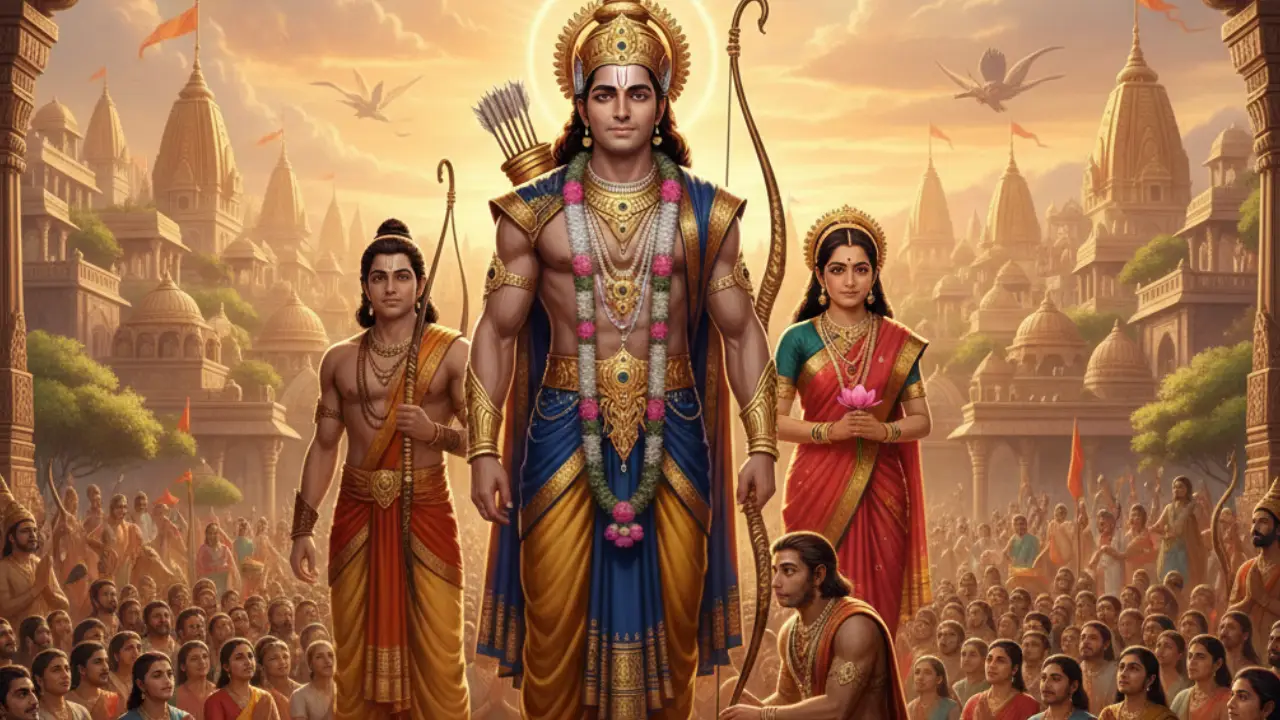
Stories of King Rama still guide hearts, choices, and leadership ideals across generations. His life does not feel distant or symbolic. It feels lived, tested, and deeply human. People return to his story because it speaks to everyday struggles. Duty, temptation, loss, patience, and moral courage appear on every page. King Rama stands not as a flawless figure, but as a conscious one. His decisions shape the idea of righteous living even today.
The legend of King Rama comes from lived values rather than grand miracles alone. He faced conflict with calm resolve. He honored truth even when truth demanded sacrifice. His strength came from restraint, not dominance. That balance makes his story relevant to anyone seeking clarity in complex situations.
Birth of a Prince Shaped by Dharma
King Rama was born into royalty, yet privilege never defined his conduct. He grew up learning discipline before power. Teachers trained him in skills, but elders shaped his character. He listened more than he spoke. That habit later defined his leadership style.
A leader once shared how he learned patience by observing a mentor. The mentor never reacted quickly, even during crises. King Rama showed the same restraint early in life. When challenges arrived, he responded thoughtfully. His early years remind readers that character forms long before authority appears.
Choosing Exile Over Comfort
A defining moment came when King Rama accepted exile without protest. He lost a throne promised since childhood. He also lost comfort, security, and status. Yet he chose to honor his father’s word. That choice still unsettles readers.
Many people face smaller versions of this test. A professional might refuse unethical success. A parent may keep a promise that costs money or pride. King Rama shows that values only matter when they cost something. His calm acceptance teaches emotional discipline in moments of loss.
Sita and the Strength of Mutual Respect
King Rama’s relationship with Sita reflects emotional balance, not control. He treated her as an equal partner. Decisions involved respect, not dominance. Their bond relied on trust during extreme hardship.
Consider a couple facing sudden financial strain. One partner loses work. Stress rises quickly. Respect often fades first. King Rama models patience and listening during shared difficulty. Strength within relationships grows through shared responsibility and mutual dignity.
Leadership Without Ego
King Rama never ruled through fear. He led through example. People followed him because they trusted his fairness. He listened before judging. He accepted criticism without anger.
A manager once changed a failing team culture by adopting this approach. He replaced orders with conversations. Productivity improved because people felt heard. King Rama’s leadership reminds readers that authority strengthens when ego steps aside.
War as a Moral Responsibility
The battle against Ravana was not driven by revenge. King Rama treated war as a duty, not a desire. He prepared carefully. He honored opponents who fought with integrity. He mourned losses on both sides.
Modern conflicts differ, yet moral pressure remains. A business dispute, family disagreement, or legal conflict demands fairness. King Rama shows how to fight injustice without losing humanity. Victory means little if values collapse during the process.
Justice Above Personal Desire
After returning victorious, King Rama faced the hardest test of all. Public doubt challenged his personal happiness. He chose duty toward society over private comfort. This choice remains controversial and deeply complex.
A public servant once resigned after discovering a conflict of interest. The decision protected trust but cost personal security. King Rama’s action reflects this painful balance. Leadership sometimes demands choices that feel unfair personally but necessary publicly.
The Meaning of King Rama as an Ideal Ruler
King Rama represents more than bravery. He represents consistency between belief and action. His governance rested on fairness, accountability, and humility. Citizens trusted him because he held himself accountable first.
Effective leaders today mirror this approach. They accept responsibility before assigning blame. They value transparency. King Rama’s rule teaches that moral authority sustains long-term stability more than force ever could.
Lessons Readers Can Apply Today
King Rama’s life offers practical guidance for daily choices. His patience teaches emotional control during stress. His honesty shows the value of clear boundaries. His humility reminds readers to listen before reacting.
Someone navigating workplace conflict can apply his restraint. A parent teaching children about promises can reference his exile decision. King Rama becomes practical when readers see his values reflected in ordinary moments.
Why the Story Endures Across Generations
Legends survive because they adapt emotionally. King Rama’s story evolves with each reader’s experience. A student reads about discipline. A parent sees sacrifice. A leader recognizes accountability.
His legend continues because it does not preach perfection. It acknowledges pain, doubt, and difficult consequences. Readers return because they see themselves within his struggles.
King Rama and the Quiet Power of Self-Control
Strength often appears loud in modern culture. King Rama’s strength appeared quiet. He controlled impulses. He paused before acting. He accepted discomfort without resentment.
Self-control remains a powerful skill today. Financial discipline, emotional maturity, and ethical consistency rely on restraint. King Rama proves that mastery over self creates lasting influence.
Why King Rama Still Matters Today
The legend of King Rama remains relevant because it addresses human nature honestly. People still struggle with promises, power, and pressure. His life offers a reference point when decisions feel unclear.
Reading his story invites reflection rather than blind admiration. Readers ask themselves harder questions. Would I choose comfort or integrity. Would I listen or react. King Rama stays alive through those questions.
Final Thoughts and Reflection
King Rama stands as a mirror rather than a monument. His story challenges readers to examine personal values. He invites steady growth, not instant perfection. His life shows that dignity emerges through consistent choices.
Which moment from King Rama’s story speaks most strongly to you. Share your reflection in the comments. Your insight may guide someone else today.


