
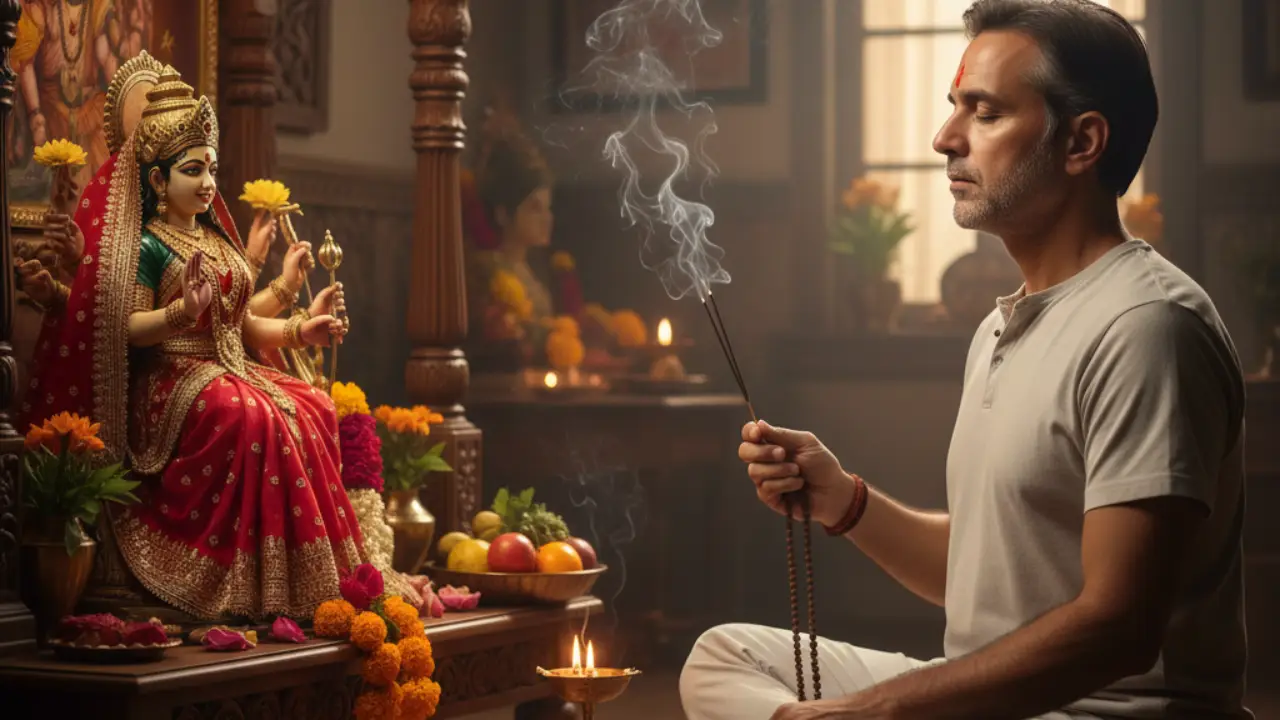
Chanting the divine name, or namasmarana, holds a sacred place in Hindu spiritual practice. It offers a simple yet powerful way to connect with the Divine in daily life. Many saints have emphasized its importance over centuries, and its relevance only grows in today’s chaotic routines.
Let’s explore why namasmarana isn’t just a devotional act but a transformative spiritual habit anyone can embrace.
What Is Namasmarana?
Namasmarana means the repeated remembrance of God’s name. This can be done silently in the mind or chanted aloud. It could be any name of the Divine you resonate with — Rama, Krishna, Shiva, Durga, or even a personal mantra.
The focus is not on the volume but the devotion behind the repetition. With every utterance, you begin to tune into a higher consciousness.
Why Is It So Powerful?
The power lies in its simplicity. You don’t need rituals, elaborate preparations, or a particular place. Whether walking, working, or waiting in line, you can keep the name of God alive in your heart.
When you repeat a divine name, you align your thoughts with purity and devotion. Over time, this habit reshapes your inner world. Your mind slows down. Your worries shrink. You become calmer and more focused.
Ancient Wisdom on Namasmarana
Many saints, like Sant Tukaram, Sri Ramakrishna, and Sai Baba, have emphasized its importance. Sant Tukaram once said that even if you don’t understand scripture, just chanting the name of Vitthala (a form of Krishna) will lead you to liberation.
Sri Ramana Maharshi advised people to simply keep saying “Arunachala” with faith, claiming that it would take care of their spiritual growth.
These aren’t vague statements. These are lived truths from spiritual masters who practiced what they preached.
Real-Life Impact: A Story of Transformation
A woman named Elena from Brazil began chanting “Om Namah Shivaya” during a difficult divorce. At first, it felt forced. But she continued because it gave her a small sense of comfort. After a few weeks, she noticed she was sleeping better. Her anxiety lessened. Over time, her entire outlook changed. She began to feel guided from within.
Namasmarana didn’t just help her heal emotionally. It opened her up to deeper inner strength and trust in life.
The Science Behind Chanting
Modern studies show that repetitive chanting calms the nervous system. It lowers blood pressure and reduces anxiety. The vibrations created by words like “Om” affect brainwaves in a deeply soothing way.
This aligns perfectly with what ancient yogis have taught for centuries — that the sound of the name is not ordinary sound. It holds spiritual energy.
Namasmarana in Daily Life
You don’t need to sit in meditation for hours. Namasmarana can be woven into your routine. Here’s how:
Say the name while brushing your teeth.
Whisper the mantra while walking.
Chant during cooking or cleaning.
Keep a japa mala (prayer beads) handy.
You can even repeat a short name silently during stressful moments. It becomes your anchor.
The Heart Connection
Unlike mechanical chanting, namasmarana is most effective when done with love and sincerity. You don’t need to be perfect. You don’t need to pronounce everything right. What matters is the connection.
Think of how a child calls their parent. It’s not about grammar. It’s about emotion. That’s how namasmarana works. When done with feeling, it pulls you closer to the Divine presence.
Clearing Mental Clutter
Many people feel their mind is filled with unwanted thoughts. Meditation feels hard. Focus is difficult. But if you keep repeating the Divine Name, those thoughts slowly reduce.
You don’t force silence. You fill the space with something sacred. And naturally, peace enters. That’s the beauty of namasmarana.
Namasmarana During Challenges
During illness, grief, or loss, it’s easy to feel helpless. But the name gives strength. A man once said that when he lost his job during a recession, he kept repeating “Rama Rama” every day. It didn’t immediately solve his problem. But it gave him inner clarity. He found a better opportunity later — one he wouldn’t have seen in his earlier state of panic.
Namasmarana helps not just spiritually, but practically too. It brings calm thinking, clarity, and courage.
Guidance for Beginners
If you’re new to this practice, start small. Pick a divine name or mantra that feels natural to you. Set aside five minutes in the morning and five at night. Say it mentally or aloud. You can increase the time slowly.
Avoid overthinking. Don’t wait to be perfect. Just begin.
If your mind wanders, gently return to the name. Over time, it becomes second nature.
The Path to Inner Freedom
Many spiritual paths involve long journeys of study and discipline. But namasmarana is immediate. It’s accessible. You can start today, right where you are.
You don’t need to change your religion, job, or lifestyle. All you need is the will to remember. The divine name itself starts clearing the path.
Final Thoughts: Your Daily Spiritual Anchor
Namasmarana is more than a religious practice. It’s a lifeline to your own peace, power, and purpose. It asks nothing but your sincerity. And it gives everything in return — calm, clarity, strength, and deep joy.
Whether you’re walking through stress, loneliness, or confusion, remember this: The Divine Name is always with you. Call it. Whisper it. Sing it. It will respond.
Have you tried namasmarana before? Or are you just starting? Share your journey or questions in the comments. Let’s build a space where we inspire each other to grow spiritually through something as simple and sacred as remembering the Divine Name.