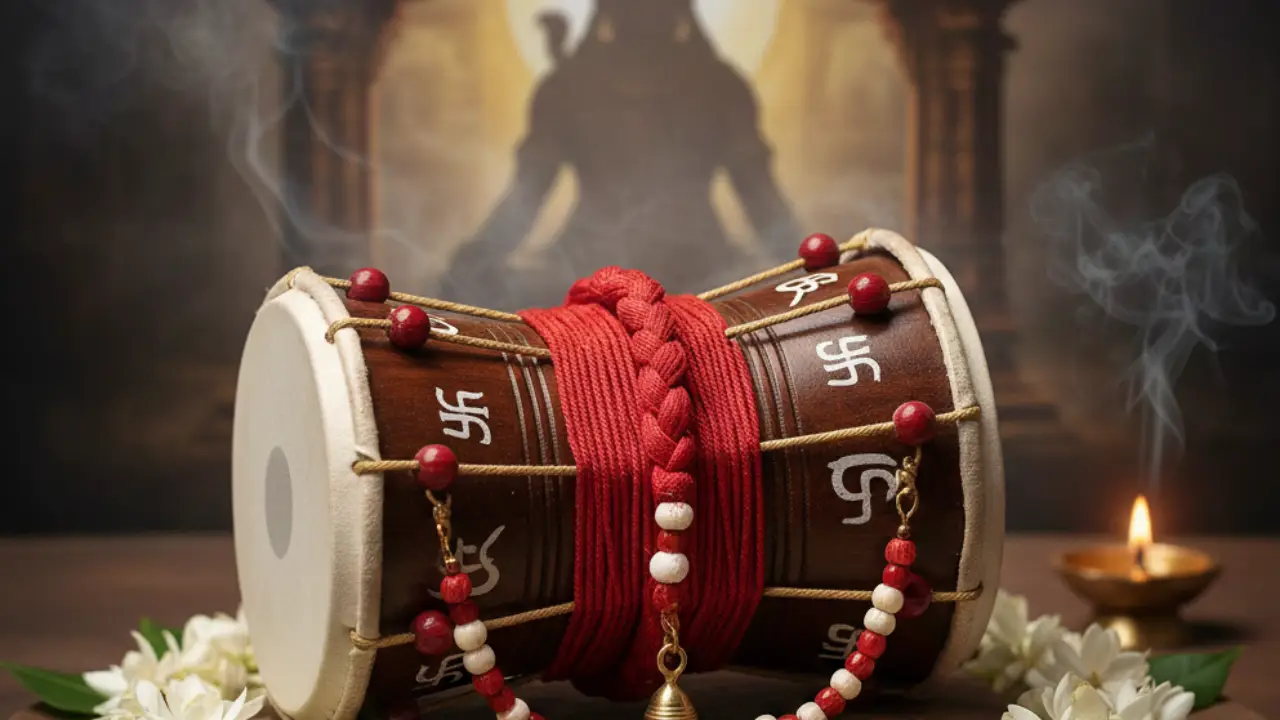
The damru of Lord Shiva holds a sacred place in Hindu tradition. This small drum, shaped like an hourglass, is more than a musical instrument. It is a cosmic symbol of creation, rhythm, and the balance between life and death. Devotees believe that when Shiva plays the damru, the sound reverberates across the universe, giving birth to creation and sustaining its rhythm.
Why the Damru Matters in Hindu Tradition
The damru is not just a tool of music. It represents the eternal sound of existence. According to scriptures, the vibrations from the damru created the Sanskrit language. This language later became the foundation of Vedic knowledge. The beats also signify the heartbeat of the universe. Every throb of life, every breath, resonates with the sound that emerged from Shiva’s damru.
Many saints describe the damru as the bridge between silence and sound. Silence stands for the formless aspect of the divine, while sound marks the beginning of creation. The damru becomes the sacred link that connects both.
The Damru and the Dance of Creation
Shiva’s cosmic dance, known as Tandava, is incomplete without the damru. During this dance, the damru sets the rhythm of the universe. Each beat represents cycles of creation and dissolution. Just as day follows night, creation follows destruction. The damru reminds us that nothing is permanent. Everything changes, yet life continues.
Imagine a potter shaping clay on his wheel. The wheel spins, destroys rough forms, and creates new ones. The damru works the same way. Its rhythm destroys stagnation and brings new beginnings. Devotees can learn from this cycle and accept changes in their own lives.
A Deeper Look at the Symbolism
The damru has a unique shape. Its narrow middle shows the point where energy transforms. The two wider ends represent the dualities of life: creation and destruction, male and female, silence and sound. When Shiva plays the damru, both sides unite in harmony.
The sound “Om” is believed to have emerged from the damru. Om is the universal vibration, the sound that carries creation itself. That is why many yogis use the damru during meditation and rituals. The sound helps align the mind with universal energy.
Practical Lessons from the Damru
The damru is not just a religious symbol. It holds practical wisdom for modern life. Here are some takeaways we can apply daily:
Embrace Change: Just as the damru creates and dissolves, life constantly changes. Holding on creates pain. Acceptance brings peace.
Stay in Rhythm: The damru teaches balance. Work, rest, joy, and grief all have their rhythm. Respecting this rhythm improves harmony in life.
Find Your Sound: Just as the damru produces unique beats, each person carries a unique voice. Expressing that truth leads to growth.
Transform Energy: The narrow point of the damru shows how energy transforms. Negative energy can shift into positive through awareness and practice.
Stories of the Damru in Scriptures
Hindu texts mention the damru often. According to one story, Lord Shiva first played the damru after his dance of destruction. The sound created the first syllables of Sanskrit, known as Maheshwara Sutras. These sutras laid the foundation of all language and grammar.
Another story says that when sages doubted the power of Shiva, he played the damru to reveal the cosmic rhythm. The vibrations silenced their doubts and filled them with divine awareness. These stories show that the damru is more than sound. It is divine truth made audible.
The Damru in Spiritual Practice
Devotees often use small damrus during meditation or chanting. The sound creates vibrations that calm the mind. Just like the steady beat of a drum guides a dancer, the damru’s beat guides the wandering mind back to focus.
A modern example can be seen in people dealing with stress. A devotee once shared how playing a damru for ten minutes each morning changed his life. The rhythm shifted his mood, cleared his mind, and gave him strength for the day. Such practices prove that ancient wisdom still holds value today.
The Damru and Sound Healing
Today, sound healing is gaining attention worldwide. Practitioners use different instruments to heal emotional and physical imbalances. The damru has been used for this purpose for centuries. Its sound balances energy centers in the body and clears negative vibrations.
Imagine returning from a stressful day. Instead of drowning in noise, listening to the damru’s rhythm can bring peace. Its beats remind us that we are part of something greater. This is why many yogis consider the damru a sacred healing tool.
How Devotees Can Connect with the Damru
Connecting with the damru of Lord Shiva does not require special rituals. Simple steps can help devotees experience its power:
Listen to recordings of damru beats during meditation.
Keep a damru in your altar as a reminder of cosmic balance.
Reflect on its symbolism during daily prayer.
Use it as a tool to release stress and focus the mind.
These steps may seem simple, but they align the mind with divine energy.
The Damru’s Relevance Today
Life today is fast and often chaotic. Many feel disconnected from their inner self. The damru offers a timeless solution. Its rhythm reminds us of balance, change, and renewal. Whether one is a spiritual seeker or simply looking for peace, the damru’s symbolism speaks to all.
The damru of Lord Shiva is not locked in the past. It lives on through practices, meditation, and rituals. It offers timeless wisdom for modern challenges.
A Call to Reflect
The damru of Lord Shiva is not just an ancient drum. It is the heartbeat of creation, the rhythm of balance, and the call to transformation. Its sound carries lessons we can apply daily. From embracing change to finding inner balance, the damru guides us toward spiritual growth.
If you keep a damru or have felt its energy in your life, share your story. Your experience can inspire others to discover this sacred symbol in a deeper way.