Snakes often evoke fear, yet for Hindus, they are sacred beings. Nag Panchami celebrates this powerful symbolism through rituals and reverence. This day, rooted in ancient wisdom, continues to guide millions towards respect for life and nature.
What Is Nag Panchami?
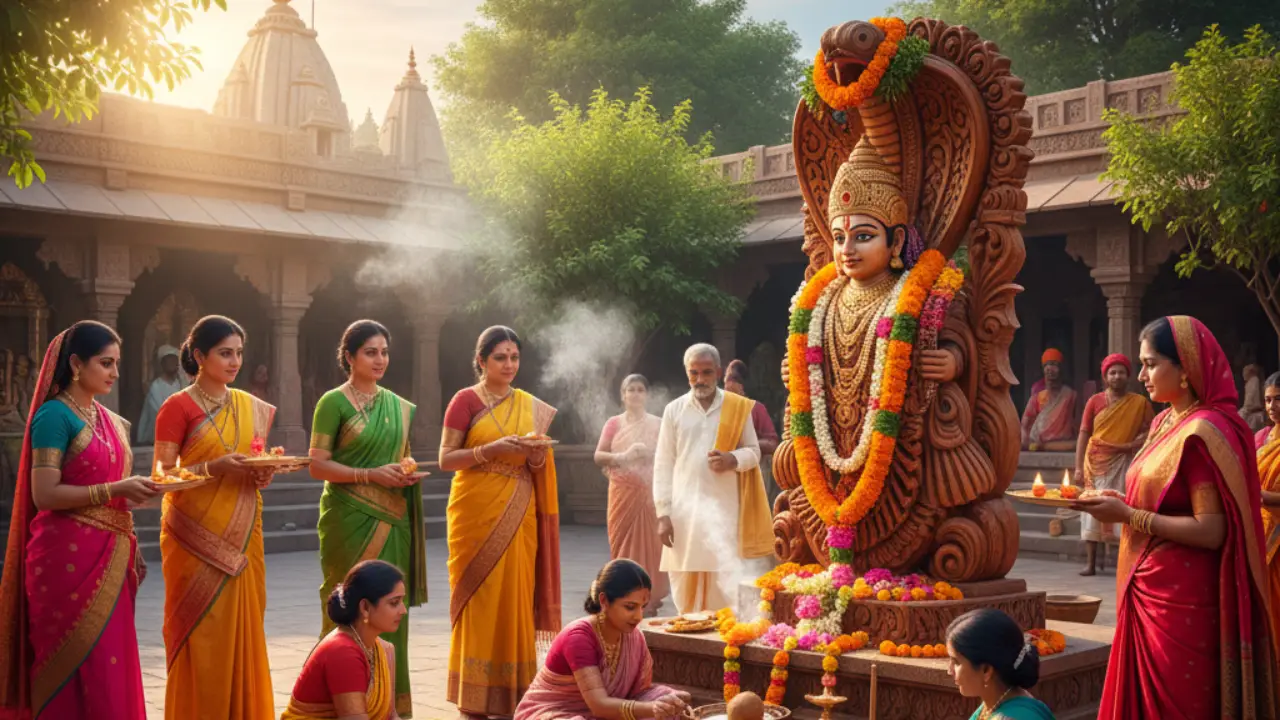
Nag Panchami is a Hindu festival dedicated to worshipping serpents, or nagas. It falls on the fifth day of Shravana month (July–August). Families offer milk and prayers to live snakes or their idols. This is done to seek protection, blessings, and spiritual harmony.
Unlike other festivals that involve grand celebrations, Nag Panchami is more intimate. It brings faith, ecology, and folklore together in a beautiful way.
The Deeper Spiritual Meaning
Snakes represent kundalini shakti, the divine energy that lies dormant at the base of the spine. According to yogic belief, when awakened, this energy rises like a coiled serpent. It travels up the chakras to bring spiritual enlightenment.
This idea isn’t just metaphorical. Many saints and practitioners have experienced deep transformation by meditating on this sacred energy. That’s why snakes are often seen wrapped around Lord Shiva’s neck. He has mastered the kundalini, symbolizing supreme awareness and control.
Mythological Roots of Nag Panchami
One popular legend tells the story of a young farmer’s son who unknowingly killed baby snakes while ploughing his field. Their mother, the Naga queen, vowed revenge. But when she saw the boy’s sorrow and his sincere prayers, she forgave him. She even brought him back to life after his tragic death.
Another tale links Nag Panchami with Lord Krishna. As a child, Krishna subdued the evil serpent Kaliya, who had poisoned the Yamuna River. After the defeat, Krishna spared Kaliya’s life. The serpent then promised never to harm anyone again.
These stories remind us of the importance of respect, compassion, and the balance between man and nature.
Why Snakes Are Worshipped
Hindus see snakes as more than just animals. They are considered guardians of water sources, treasures, and dharma. They are associated with powerful deities like Lord Shiva, Lord Vishnu (who sleeps on the serpent Ananta), and the Nagas in Patal Lok.
Worshipping snakes is not just religious—it’s symbolic. It teaches us to conquer fear, show gratitude to nature, and honour all forms of life.
Traditional Rituals and Customs
On Nag Panchami, devotees follow various rituals based on regional traditions:
Milk Offerings: Devotees pour milk over snake idols or live cobras. This act symbolizes humility and devotion.
Nag Mantras: People chant specific mantras like “Om Namo Bhagavate Vasuki Devaya” to seek blessings and protection.
Drawing Nag Images: In some households, women draw snake images at their doorsteps using rice flour or turmeric paste.
Fasting: Many observe a fast until sunset, believing it brings good health and protection from snake bites.
Nag Temples: Temples dedicated to serpents, like those in South India and Maharashtra, witness large gatherings. Priests conduct special pujas.
These customs are deeply personal for many families. They pass them down through generations with faith and care.
Eco-Spiritual Lessons We Can Learn
Nag Panchami is more than ritual—it’s a reminder to live in harmony with nature. Snakes are crucial for controlling rodent populations. Killing them disturbs the ecosystem.
Unfortunately, superstition and fear have led to the mistreatment of snakes. This festival offers a chance to change that perspective. By honouring them, we also respect the environment that supports all living beings.
Here’s a life example: My neighbour, a farmer from Karnataka, always leaves a portion of his field untouched for snakes to live in peace. “If they thrive, so do we,” he says. His crops remain mostly rodent-free without chemicals. That’s the kind of balance Nag Panchami encourages.
Regional Variations of Celebration
The way Nag Panchami is celebrated varies from place to place.
Maharashtra: Women perform special rituals near anthills or snake pits. Devotees often avoid digging or farming on this day.
Karnataka: Processions of live snakes carried by snake charmers are common. People offer flowers, turmeric, and milk.
Bihar and Uttar Pradesh: Clay idols of nagas are worshipped at home. Married women pray for their brothers’ safety.
Kerala: Serpent groves called Sarpakavu are cleaned, and traditional rituals are performed under the guidance of elders.
These practices reflect the deep-rooted respect for natural elements across different Indian cultures.
Why This Festival Still Matters
Nag Panchami is not just about rituals or mythology. It teaches life values—patience, forgiveness, humility, and harmony. In a world chasing speed and control, this day reminds us to pause and acknowledge forces beyond our understanding.
It encourages us to protect those we fear and to see sacredness in every creature. This mindset can help build not just spiritual health, but also a more compassionate society.
Parents often use this day to tell children old stories. These tales, passed down orally, shape how the younger generation views nature, respect, and balance. They become life lessons that stay with them.
Practical Takeaways from Nag Panchami
Here’s how you can honour the spirit of Nag Panchami in daily life:
Respect All Life: Avoid killing snakes or harming creatures out of fear.
Live Sustainably: Protect the natural habitats around you. Small actions matter.
Cultivate Patience: Like the silent and calm nature of a snake, learn to pause and observe.
Practice Gratitude: Offer thanks for nature’s gifts—even the ones you don’t fully understand.
Teach Through Stories: Share meaningful tales from this festival with your children or students.
These small practices connect us to ancient wisdom that’s still relevant today.
Closing Thoughts
Nag Panchami isn’t just a snake festival—it’s a call to respect nature, honour spiritual energies, and live with awareness. It invites us to reflect, protect, and celebrate the unseen forces that sustain life.
When you next see a snake, try not to react with fear. Think of the stories, the prayers, the deep wisdom our ancestors passed on. That shift in perception might just lead to a deeper connection with yourself and the world around you.
Have you celebrated Nag Panchami in your family? Do you have any stories or traditions to share? Leave a comment below—I’d love to hear your experiences!